
Last Updated on March 26, 2026 by Anne Brock
Your Business Still Has Time in 2026 to Benefit from Solar Tax Incentives
No, Incentives Have Not Gone Away
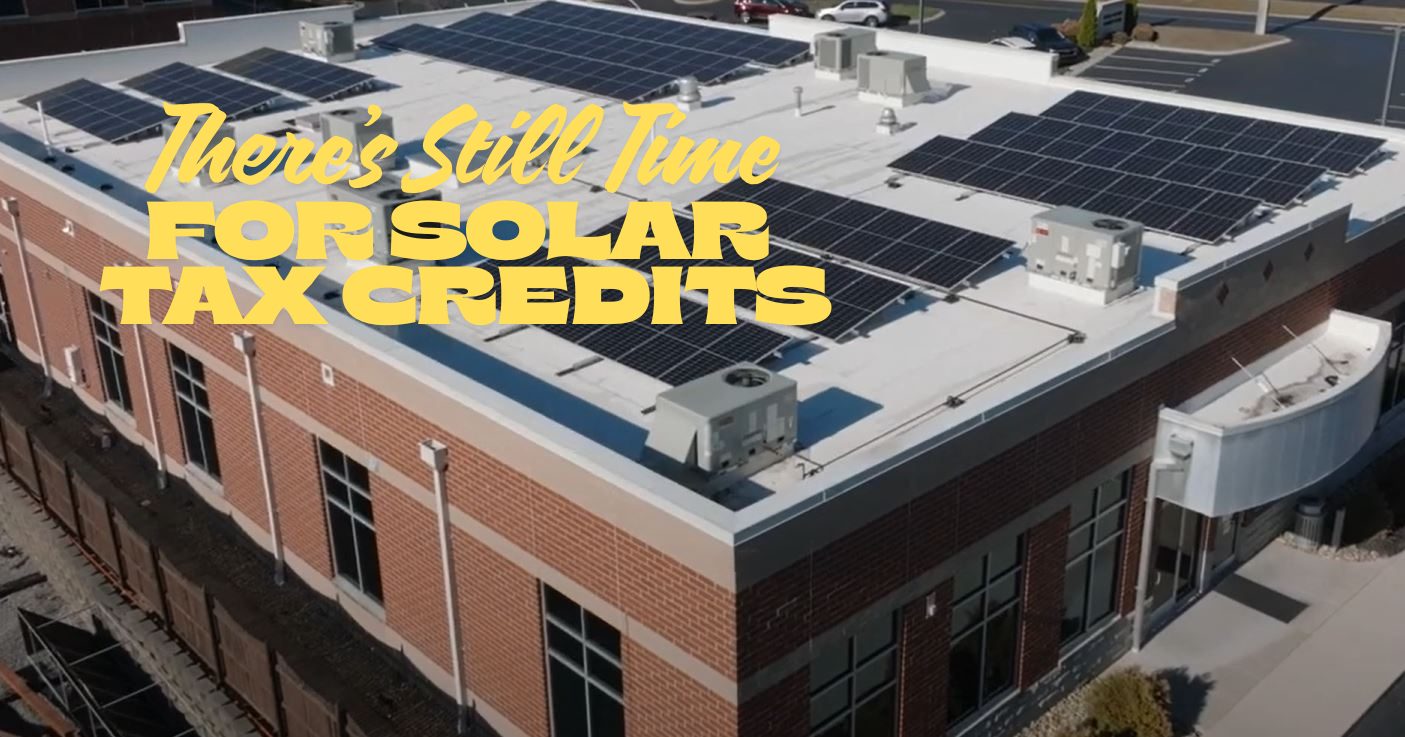
Solar or solar with storage still offers a prime opportunity to invest in lowest-cost, on-site, reliable energy that can lower your business overhead costs. Imagine that instead of an ever higher monthly utility bill, you pay significantly less each month. Plus, your accountant can show you how renewable energy qualifies your business for a 30% to 50% tax credit. While you may have heard that tax incentives have gone away for residential solar projects, they are still an opportunity for business owners.
But Time Is of The Essence
You will want to be mindful of the calendar when planning renewable energy projects. The timetable started changing last year, so you may want to start your larger project by July 4 of 2026, or start any project sometime in 2026, with updated deadlines for completion in order to receive the tax credits.
The Internal Revenue Service offers this guidance: See the Clean Energy tab of Big, Beautiful Bill provisions.
Why July 4th is Important?
Why are so many businesses eyeing July 4th this year? That’s because independence from rising utility bill costs could hinge on starting construction of solar or solar+storage projects by this date. If so, the project has four years to finish and still be able to claim at least a 30% tax credit under the Inflation Reduction Act.
If the renewable energy project does not begin by July 4th of 2026 it must “enter service,” being completed and commissioned, by the end of 2027 to still qualify for the tax credits.
Why Bonus Tax Incentives?
There are potential bonus credits for projects that meet certain criteria. Your accountant may be able to confirm you qualify for bonus adder credits in 10% increments. These can be for meeting guidelines for components made in the USA, for being in a location deemed economically distressed, or for a location considered an energy community that has lost jobs to coal plant closures.
See Energy Community mapping from the federal government here.
See Clean Electricity Low-Income Communities Bonus Credit Program details here.
See IRS details on the Domestic Content Bonus Credit here.
Why Made in America?
Starting in 2026, the requirements are more stringent for using components that are made domestically. The reality is that not all commercial-grade components have been manufactured and competitively priced from factories on US soil, though there has been an industry effort to improve that. Even now, around half of the components for a solar project can still be made overseas (now sometimes labeled from a Foreign Entity of Concern), because even the federal government realizes this is still the most accessible way to get a project completed and add some energy independence with solar.
Clean Power Helps Businesses Thrive
The American Clean Power Association reports that 2025 was another banner year for the amount of clean energy added from solar, wind and storage. It made up 90% of new capacity added to the power grid. You can read more about this here.
Let us know today about your business so we can get started on your solar solution. Contact us here online. Or speak directly with our Sales Director at 865-888-6055.
More Resources
Solar Energy Industries Association on Safe Harbor
Solar Power World on Physical Work Test
Internal Revenue Service Guidance
More Examples of Solar Solutions
Here are three examples of how Solar Supports the Bigger Picture for businesses and nonprofits.
Maximizing consumption was the goal of this business in putting solar atop a warehouse.
Solar + storage is the shining example at this demonstration project we built on a college campus.