
Last Updated on July 24, 2026 by Anne Brock
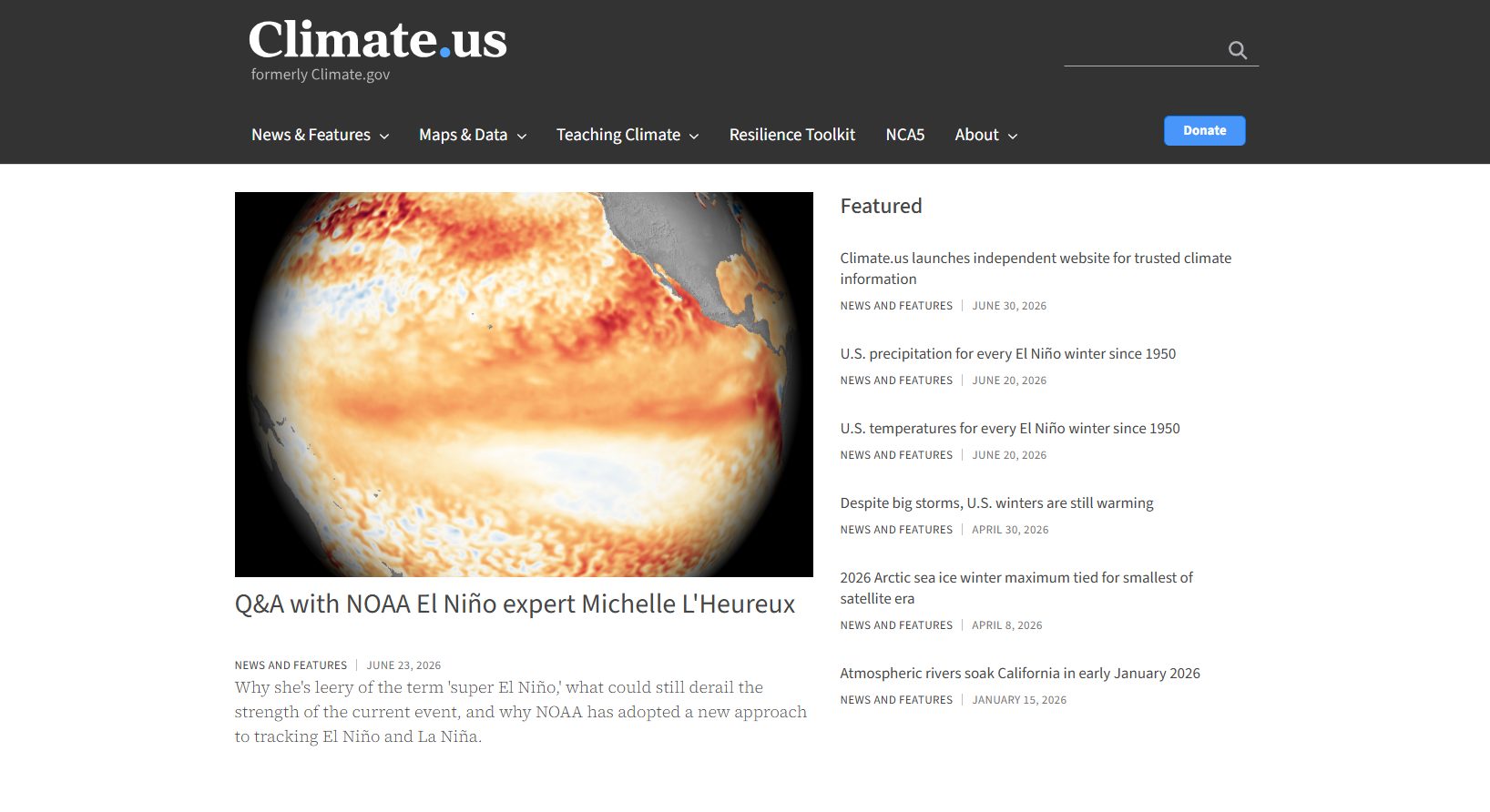
If you’ve been missing the wealth of climate research you used to find at a publicly funded federal website, you can access much of it again at a website curated by previous government scientists. Former members of the team behind the National Oceanic and Atmospheric Administration’s website Climate.gov, which was shut down under the current administration, have preserved much of the publicly-funded data, relaunching an independent, nonprofit website called Climate.us.
Now, you can check out data summed up about Arctic sea ice, atmospheric carbon dioxide, glacier mass and more indicators of climate change.
On its mission statement page, the new website states: “Americans need to understand climate because the very best solutions to our country’s climate-related challenges will emerge from the collective action and creativity of a climate-literate public.” Public donations will help fund the efforts of the team that plans to add new content when possible.
“Trusted climate information should not disappear when politics change,” said Rebecca Lindsey, Managing Director of Climate.us. “Climate.us is building an independent, durable platform so people can continue to find the data and information they need to understand and talk about climate, and to teach, report, plan, prepare, and make informed decisions.”
The website contains a wealth of this saved and archived information, as well as new materials like this article that explains the basics of how greenhouse gases affect life on earth because of climate change. An El Niño expert explains what is happening with the current El Niño ocean pattern in this Q & A.
Resources on this website include access to hundreds of lesson plans and projects on teaching climate to school-aged students. You get free access to scientifically sound, vetted lessons that are ready to use.
The website also curates links conveniently to other online tools like the US Drought Monitor, which shows most of East Tennessee being unusually dry at this time. The Climate Resilience Toolkit centralizes links to dozens of examples of how communities are preparing for natural disasters.
You can see the new website at Climate.us.